
The Emergency Plan Every Family With an Aging Parent Needs
A fall, power outage, severe storm, sudden illness, or evacuation can turn a normal day into a family crisis. The first hour is not the time to decide who should call the doctor, where medications are stored, or whether your parent can leave the home safely.
A practical emergency plan answers those questions in advance. It should be simple enough to use under stress and specific enough that more than one person can carry it out.
Plan for the emergencies most likely to happen
Consider health emergencies, falls, extreme weather, fire, power loss, flooding, transportation problems, and a caregiver becoming unavailable. Your parent's location, health, mobility, equipment, pets, and living arrangement will shape the plan.
Ask what would happen if phone service failed, an elevator stopped working, oxygen or refrigerated medicine lost power, roads became impassable, or your parent had to leave quickly.
Create one emergency information sheet
Include your parent's full name, address, date of birth, emergency contacts, doctors, pharmacy, diagnoses, allergies, medications, insurance, preferred hospital, legal decision-makers, and any communication, mobility, cognitive, or sensory needs.
Place copies where they can be found quickly and provide them to the people assigned emergency roles. Update the sheet whenever information changes.
Prepare supplies and evacuation details
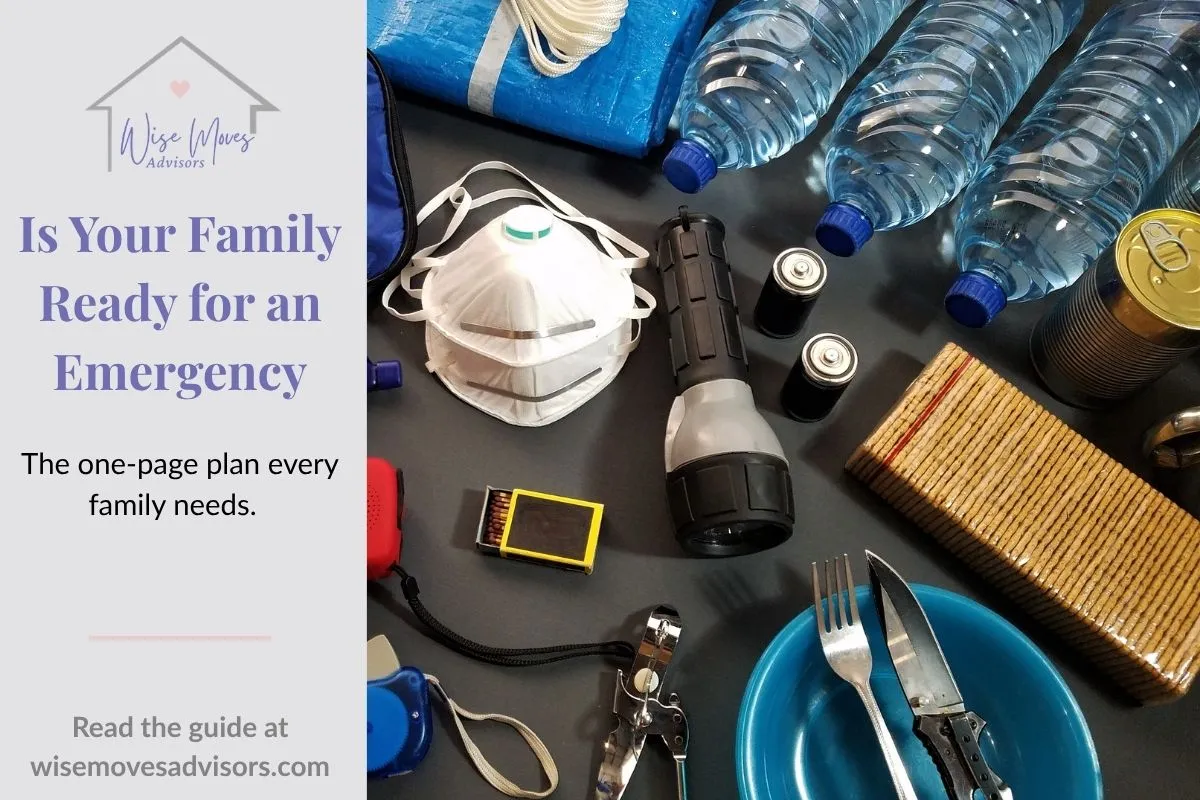
Keep basic supplies, copies of essential documents, medications, chargers, flashlight, water, food appropriate to dietary needs, hygiene items, and pet supplies together. Follow current local emergency guidance for the amount and type of supplies to keep.
Write down where your parent could go, how they would get there, who would provide transportation, and what equipment must travel with them. If your community offers emergency registries or special-needs assistance, learn how those programs work before a disaster.
Give each person a job
Choose who will call your parent, who will go to the home, who will contact medical professionals, who will update the family, and who will care for pets or secure the property. Name backups in case the first person is unavailable.
Practice the communication plan. A short family review can reveal outdated phone numbers, unrealistic travel assumptions, or supplies that are missing. The plan does not need to cover every possibility. It needs to help the family take the next safe step together.
Want the full picture? Download the free Aging Parent Checklist, which covers every planning area in this series.
Keep planning: related guides
Helpful resources
How Wise Moves can help
You do not have to figure out every decision at once. Wise Moves Advisors helps families understand their options, organize next steps, and connect with trusted resources so they can move forward with greater clarity and confidence.

